
Horizontal vs Vertical House Numbers — Which Fits Your Space Best?
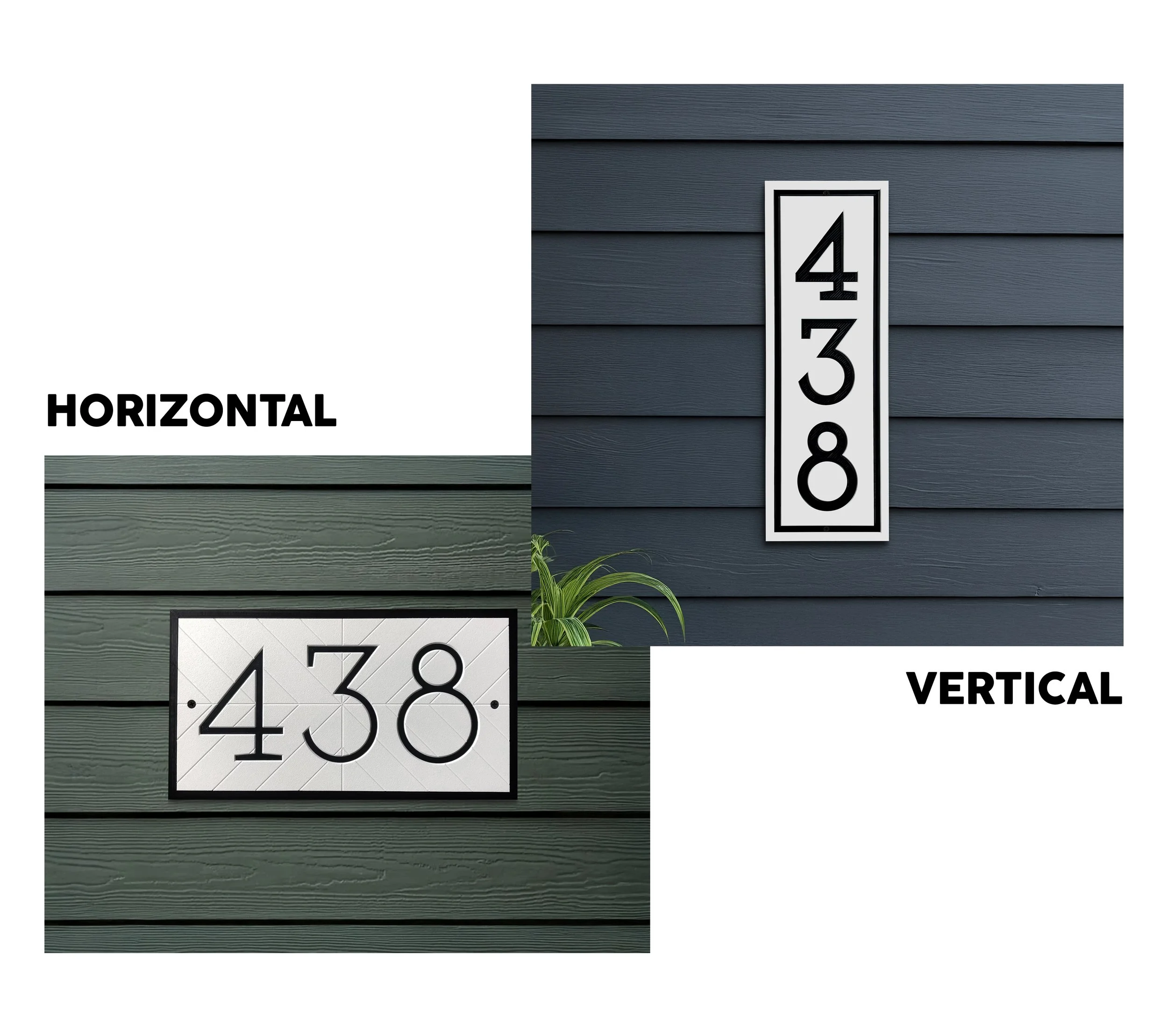
Choosing the Right Orientation for Your House Numbers
Your house number sign isn’t just a decorative detail — it’s a functional part of your home’s exterior. One of the most impactful choices you can make is deciding whether your sign should be horizontal or vertical.
The right orientation depends less on style and more on space, visibility, and the mounting areas available around your entryway. This guide breaks down where each orientation works best so you can choose the layout that makes your home look balanced, intentional, and easy to find.
Horizontal House Number Signs
Horizontal signs are the most widely adaptable because they work seamlessly with a variety of porch layouts and home facades.
Where Horizontal Signs Work Best
1. Wide Front Porches
If your home has a broad porch area, long handrails, or extended siding lines, a horizontal sign complements that width naturally.
Ideal for:
Spacious ranch-style homes
Homes with long porch roofs
Wide areas beside or above the door
2. Large Open Wall Spaces
If you have a big area to fill — such as:
The space next to the garage
The area above a mailbox
A broad section of siding — a horizontal sign helps anchor the space without feeling lost.
Just below an outdoor light
3. Longer Address Numbers
Addresses with 4–6 digits often read more clearly and naturally in a horizontal layout.
Recommended Horizontal Example:

Modern House Number Sign With Herringbone Pattern, Horizontal
Starting at $19.95
Vertical House Number Signs
Vertical signs shine in areas where space is limited or narrow — not because they’re necessarily more “modern,” but because they’re more efficient in tight or unique spaces.
Where Vertical Signs Work Best
1. Porch Columns & Trim
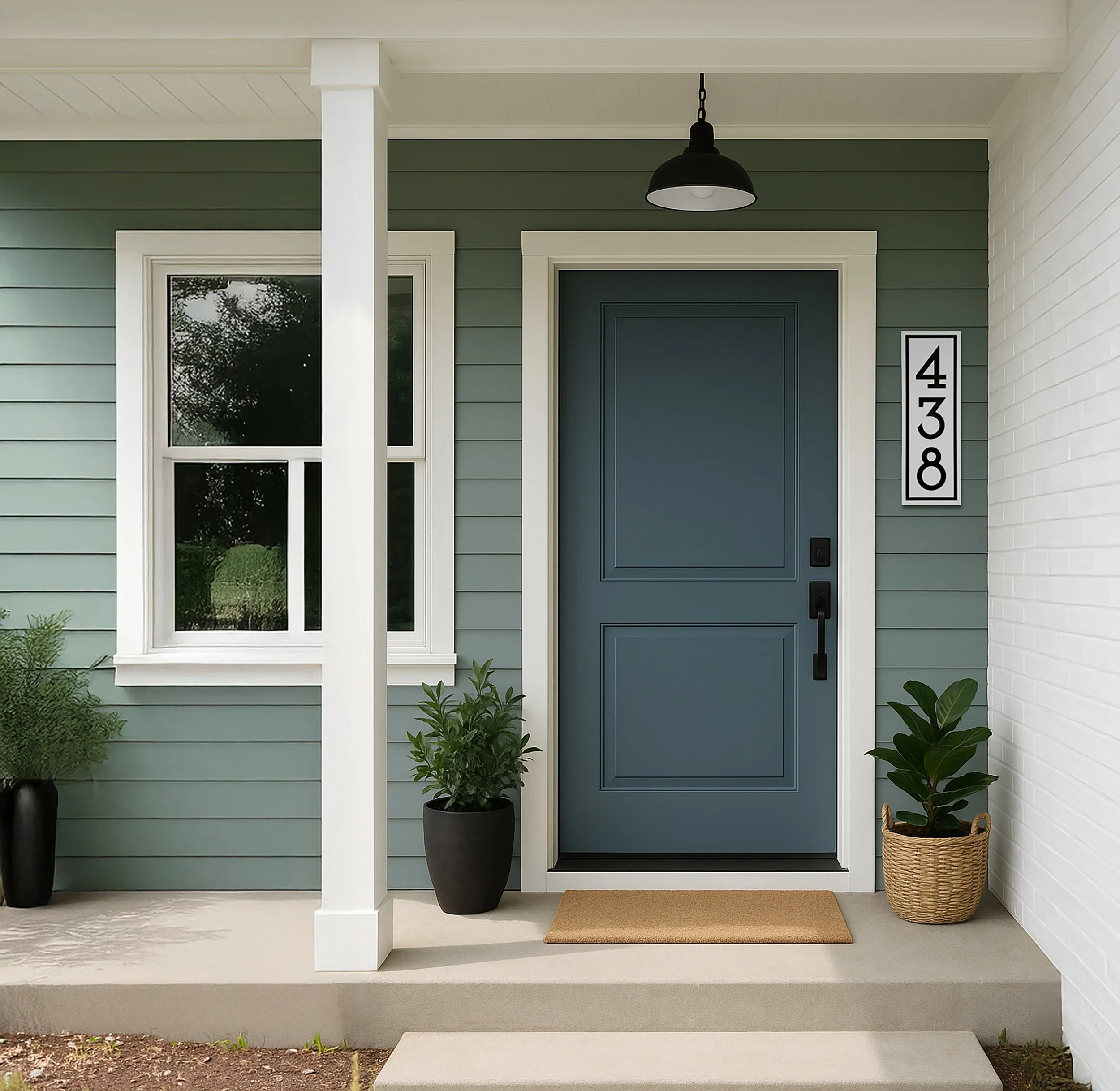
If your home has tall, narrow architectural elements, a vertical sign fits perfectly without overwhelming the space.
Great placement options include:
Porch support columns
Narrow trim beside the door
Posts and beams
2. Entry Posts or Gate Posts
Vertical signs are exceptional on standalone posts — especially:
At the end of a driveway
Mounted to a fence post
On a gate at the entrance of the property
They read clearly from multiple angles and create a visually strong landmark that guests and delivery drivers easily recognize.
3. Tight Wall Spaces
When your entryway is compact and gives you only a slim strip of mounting surface, a vertical sign makes the most of it.
4. Shorter Addresses
Addresses with 2–4 digits work especially well vertically because they stay balanced and easy to read.
Recommended Vertical Example:
How to Decide: Horizontal or Vertical?
1. Look at the Space First
Stand at the street or driveway and view your porch as visitors would.
Ask: Where does the sign naturally fit?
A wide wall suggests horizontal
A tall or narrow area suggests vertical
2. Consider Visibility
Choose the orientation that allows the sign to be read from the most common approach angle—whether on foot, from a car, or from the road in front of your home.
3. Work With Architectural Lines
Let your home’s structure guide you:
If the lines run across, use horizontal
If the lines run up-and-down, use vertical
4. Think About Function, Not Just Style
Vertical signs thrive in spaces where a horizontal one simply wouldn’t fit.
Horizontal signs do best where they can breathe.
Final Thoughts
Choosing between a horizontal and vertical house number sign is less about trends and more about selecting a layout that works with your home’s structure, available space, and visibility needs.
Whether mounted on a wide porch wall, a tall column, or the post at your driveway entrance, the right orientation ensures your address is both beautiful and easy to spot.
Explore all our Horizontal and Vertical Sign Options Here: Thomas Design Co. House Number Signs - Vertical & Horizontal